
Last updated November 24, 2026
 Sweep & inspection
 Caps & crowns
 Flue relining
 Masonry repair
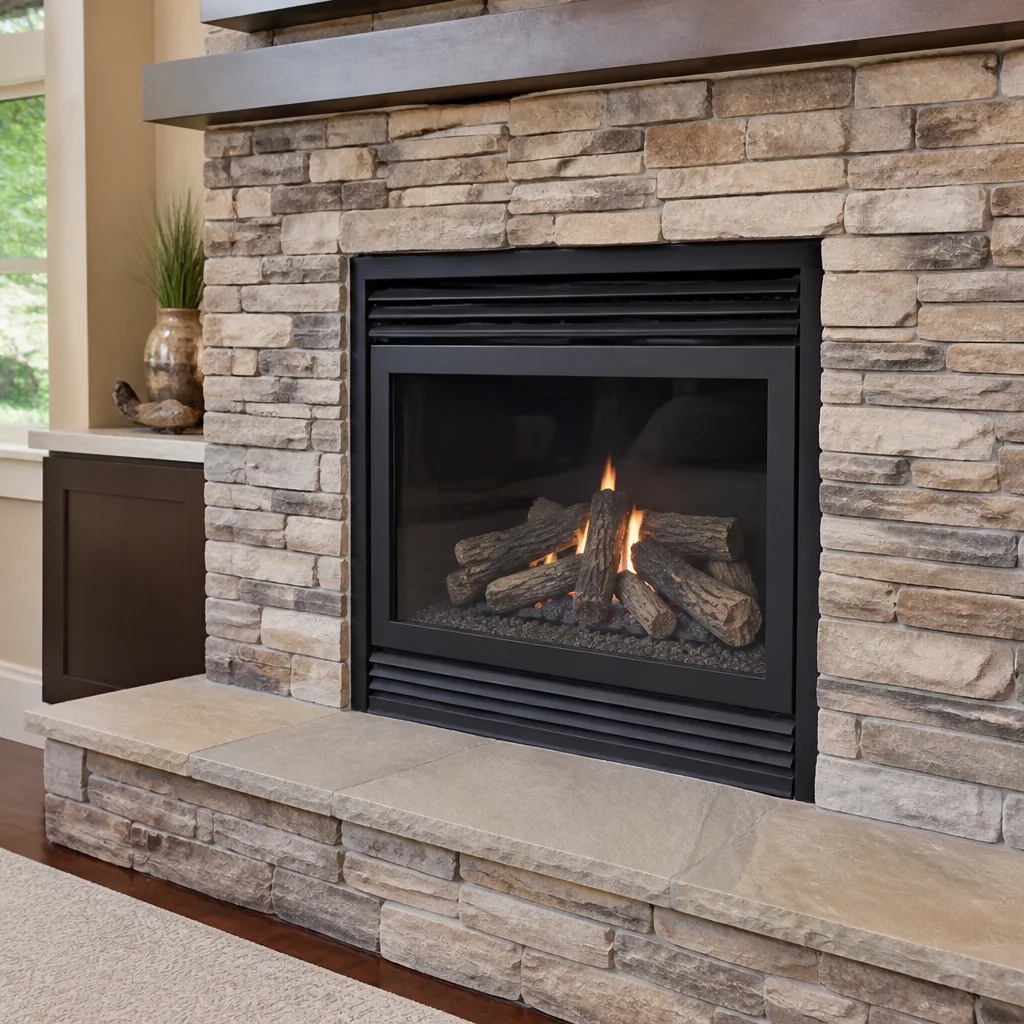 Gas fireplace service
Level 1 sweep and inspection to the NFPA 211 annual standard - flue, crown, cap, and flashing checked and photographed
Chimney sweep logs do not sweep chimneys. They loosen some creosote - which then falls where a brush and vacuum still have to collect it.
Chimney Sweep Troubleshooting in Murray: Common Problems and How to Fix Them
A smoky fireplace isn’t always a chimney problem. Plenty of the time it’s a house pressure problem, and no amount of sweeping will fix it. That single fact reshapes how you should troubleshoot anything going wrong with your fireplace: stop assuming the flue is dirty and start treating the chimney as a system, where the firebox, the flue, the cap, the crown and even your kitchen exhaust fan all pull on each other. In this guide we’ll walk you through symptom-to-cause mapping, a simple house pressure test you can run before you call anyone, and the specific signs that mean it’s time for a professional look. We’re Murray Chimney Sweep, and this is how we think about the chimneys we see around Murray.
Quick Answer
Most chimney troubleshooting in Murray comes down to isolating one of five things: draft problems caused by house pressure or a blocked flue, creosote buildup, water intrusion through a failing cap or crown, a damaged flue liner, or a firebox that needs masonry repair. Smoke rollout and slow draft are usually pressure or blockage issues, white staining points to water getting in, and a strong creosote smell in warm weather often signals stage-2 buildup. A visual check can narrow it down, but anything involving the flue interior needs a Level 2 inspection before you light another fire.
Styles & brands we work with
- Sweep & inspection
- Caps & crowns
- Flue relining
- Masonry repair
- Gas fireplace service
Table of Contents
- Symptom-to-Cause: What Each Sign Actually Means
- The House Pressure Test: Check This Before You Blame the Flue
- What a Creosote Smell in Summer Really Tells You
- Cap and Crown Failures That Look Like Draft Problems
- Flue Liner Damage: The Problem You Can’t See From the Ground
- What You Can Safely Monitor vs. What Needs a Level 2 Inspection
- Smoke Rollout and Backdraft: Working Through the Causes
- When to Call a Professional
Symptom-to-Cause: What Each Sign Actually Means
Chimney troubleshooting works best when you start with the symptom and work backward. A checklist that matches signs to their mechanical source saves you from guessing, and it also keeps you from paying for a cleaning that won’t solve the real problem. Here’s how we map the most common complaints.
- Smoke rolling out of the firebox opening instead of going up. Usually a pressure imbalance in the house, a flue that’s too cold to establish draft, or a partial blockage. Only occasionally a dirty flue.
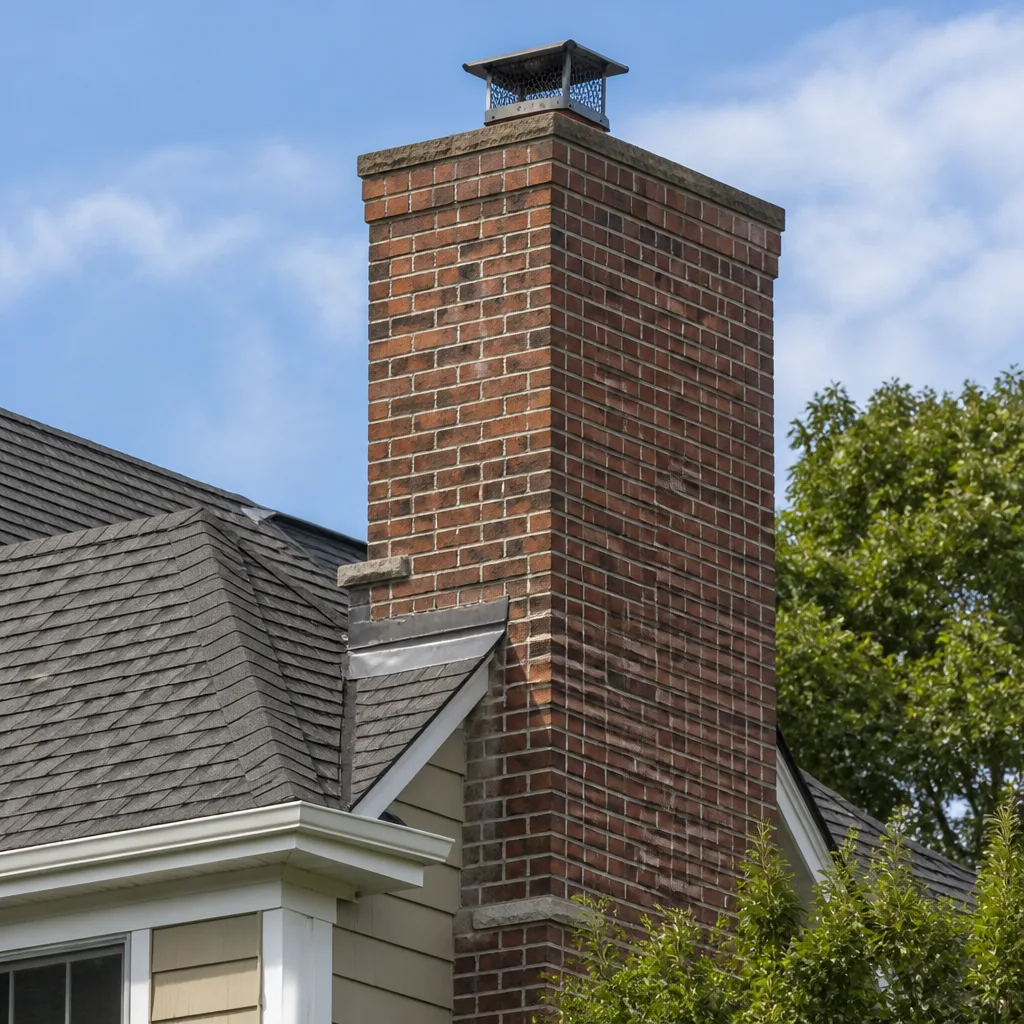
- White or chalky staining on the exterior brick. This is efflorescence, a sign moisture is moving through the masonry. The source is almost always the cap, the crown, or the flashing at the roofline.
- Slow draft that improves as the fire heats up. Cold-flue syndrome. The flue needs to warm before it pulls properly, which is common on exterior chimneys in Murray’s cold mornings.
- A persistent creosote smell in warm months. Stage-2 creosote absorbing moisture and off-gassing. This is a sign of buildup, not just surface residue.
- Dark staining on the chimney top or cap. Could be draft-related spillage or a cap that’s blocked or damaged. Hard to tell from the ground.
- Rust on the firebox or damper. Water is getting into the chimney from above, even if the roof looks fine.
Each of these has a specific mechanical cause. The mistake most homeowners make is assuming every symptom means “needs a sweep.” More often it means “needs a diagnosis.” Our team handles this as Murray Chimney Sweep work from inspection through repair, so the same technician who identifies the cause stays accountable for the fix.
The House Pressure Test: Check This Before You Blame the Flue
If your fireplace smokes, run a pressure test before you spend a dollar on sweeping. A house under negative pressure will pull smoke back down a perfectly clean flue, and in tightly built homes and remodels this is one of the most common causes we diagnose. Here’s how to check.
- Close everything else that exhausts air. Turn off the kitchen range hood, bathroom exhaust fans, dryer, and any central vacuum system.
- Crack a window about an inch in the same room as the fireplace. This relieves negative pressure temporarily.
- Light a small fire and watch the smoke. If the smoke goes straight up the flue with the window cracked and rolls out when it’s closed, you have a pressure problem, not a flue problem.
- Repeat with the exhaust fans on and the window closed. If smoke spills immediately, the fans are overpowering your flue.
A chimney needs to draw air from somewhere. When a house is sealed tight, a modern kitchen hood rated to move a lot of air, or a furnace and water heater competing for combustion air, the chimney becomes the path of least resistance for replacement air. Smoke gets pulled back into the room as a result.
What to do about it: a dedicated outside air supply, a top-sealing damper that closes the flue when the fireplace isn’t in use, or in some cases a flue extension to raise the termination point above a pressure zone. That last one overlaps with cap and crown work, which we’ll get to shortly. If the window test solves your smoke problem, you’ve just saved yourself a service call and pointed yourself at the right repair.
What a Creosote Smell in Summer Really Tells You
A creosote smell in July isn’t just residue. It usually means stage-2 creosote is present and absorbing humidity, which is a materially different problem than the light, flaky stage-1 buildup a routine sweep clears out. Get this distinction wrong and you’ll keep sweeping a chimney that needs more.
Here’s how creosote grades break down:
- Stage 1: Light, flaky, soot-like. Clears with a standard sweep.
- Stage 2: Hard, shiny, tar-like. Absorbs moisture from humid air and releases odor. More difficult to remove and a real fire hazard.
- Stage 3: Glazed and hardened like ceramic. Requires specialized removal and often indicates a flue liner problem underneath.
Murray’s summers are dry, but the shoulder seasons and occasional humid stretches give stage-2 deposits enough moisture to announce themselves. If you smell a sour, smoky, tar-like odor coming from the fireplace in warm weather when there’s no fire burning, that’s the signal.
What it changes: stage-2 removal needs rotary sweeping and a closer look at the flue. If the deposits have bonded to a clay tile liner, we may recommend resurfacing with HeatShield, a product specifically designed to restore a deteriorated flue interior without a full liner replacement in some cases. That’s a repair skill set beyond basic cleaning, and it’s one of the reasons we keep professional-grade systems like HeatShield and DuraFlex on hand rather than handing you off to a second contractor.
If you smell creosote in summer, don’t wait until fall to book. A chimney with stage-2 buildup should be cleaned before the next burning season starts.
Cap and Crown Failures That Look Like Draft Problems
Water damage is the leading cause of long-term chimney deterioration, and the most common entry points are the cap and the crown. Both can produce symptoms that look like draft issues from inside the house. Here’s how to tell them apart from ground level.
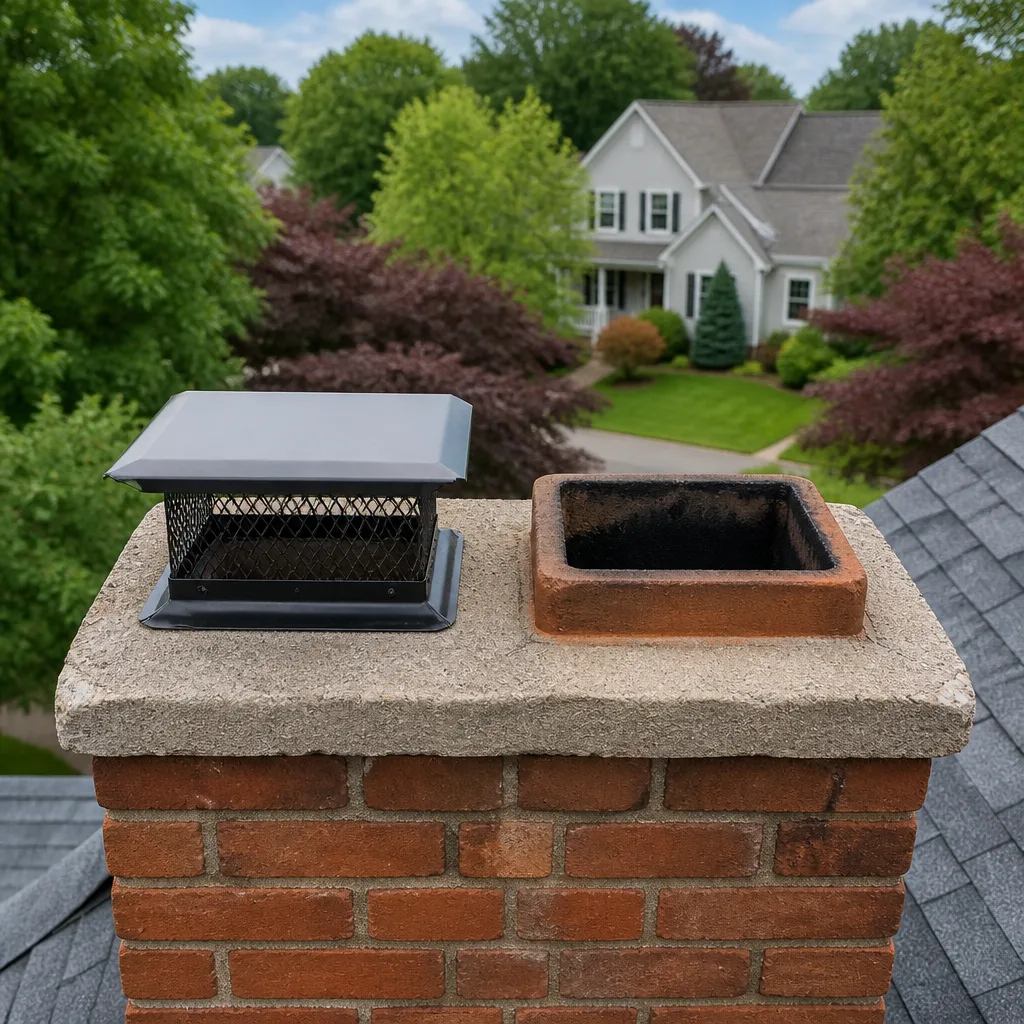
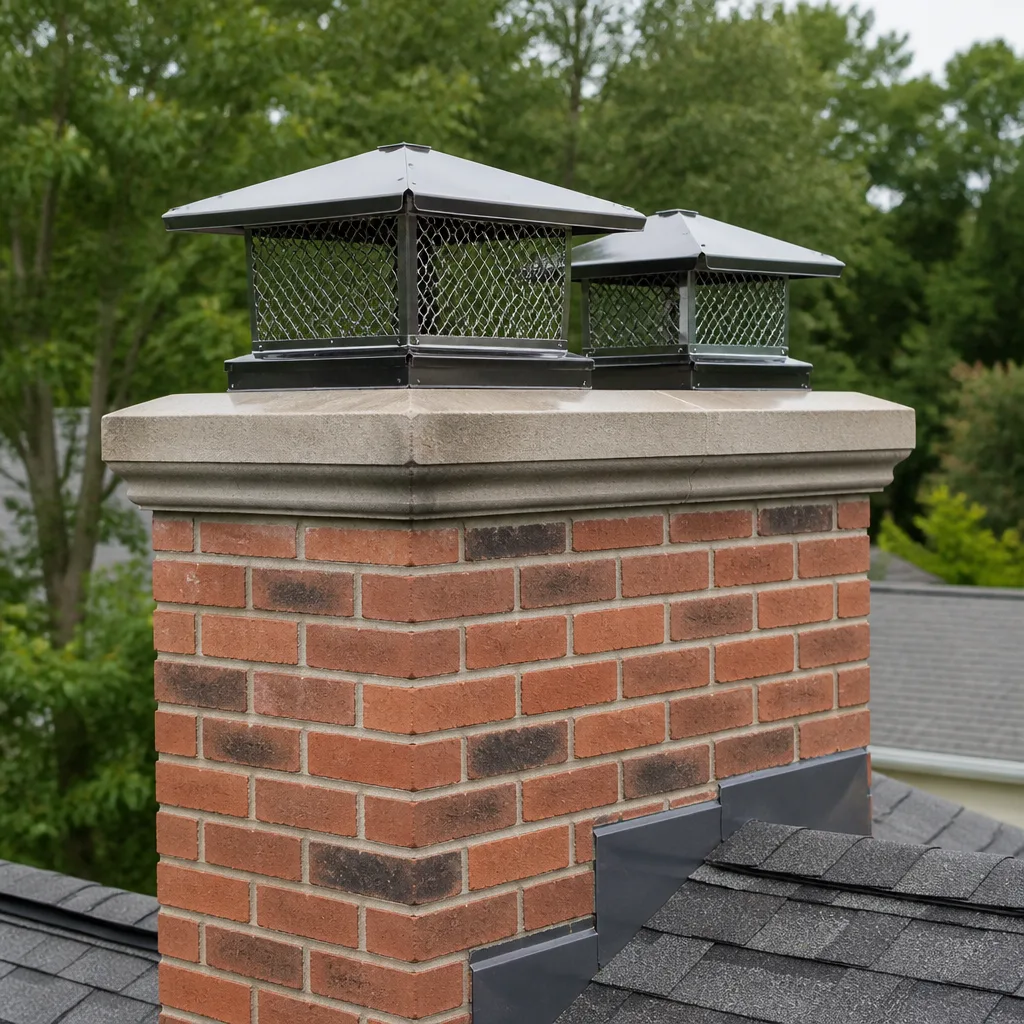
The cap sits on top of the flue and keeps rain, birds and debris out. When a cap is missing, bent, or has a clogged mesh screen, you’ll see it from the yard with binoculars. Symptoms: water in the firebox after rain, slow draft, or a nesting bird sound in the flue.
The crown is the concrete or masonry top surface that sheds water away from the flue. When a crown cracks or separates from the flue, water seeps down the outside of the flue and into the masonry. Symptoms: white staining on the exterior, rust on the damper, and in serious cases, chunks of masonry falling into the firebox.
From the ground, look for these four things:
- A cap that’s visibly tilted, missing, or has torn mesh. That’s your water source.
- Cracks in the crown wide enough to catch a fingernail. That’s not cosmetic; water is already getting in.
- White, chalky staining along the brick. Efflorescence means moisture is passing through the masonry.
- Rust stains on the firebox walls or damper. Water is reaching the interior metal, which means it’s coming from above.
Cap and crown work addresses the root cause, not the symptom. We install custom and standard caps using Olympia Chimney and Famco components, which are credentialed lines trusted by chimney professionals. Getting the cap and crown right is often the difference between a chimney that lasts and one that gets a rebuild in ten years.
Flue Liner Damage: The Problem You Can’t See From the Ground
You can’t see flue liner damage from the ground, and that’s exactly why a visual check from the roof deck isn’t enough. When a tile liner cracks, spalls, or separates, you get one of three symptoms: smoke spillage, water infiltration, or (rarely noticed until inspection) carbon monoxide leakage into the house. A damaged liner is the single most common reason we recommend a Level 2 inspection before a homeowner lights another fire.
What causes liner damage in Murray:
- Thermal shock from repeated hot fires followed by rapid cooling. More common in cold, dry air than most homeowners realize.
- Chimney fires, even small ones, that crack the interior glaze of the tile.
- Moisture intrusion through a failing crown or cap, followed by freeze-thaw cycles that expand cracks.
- Age and the original construction method. Older tile liners can shift and separate at the joints.
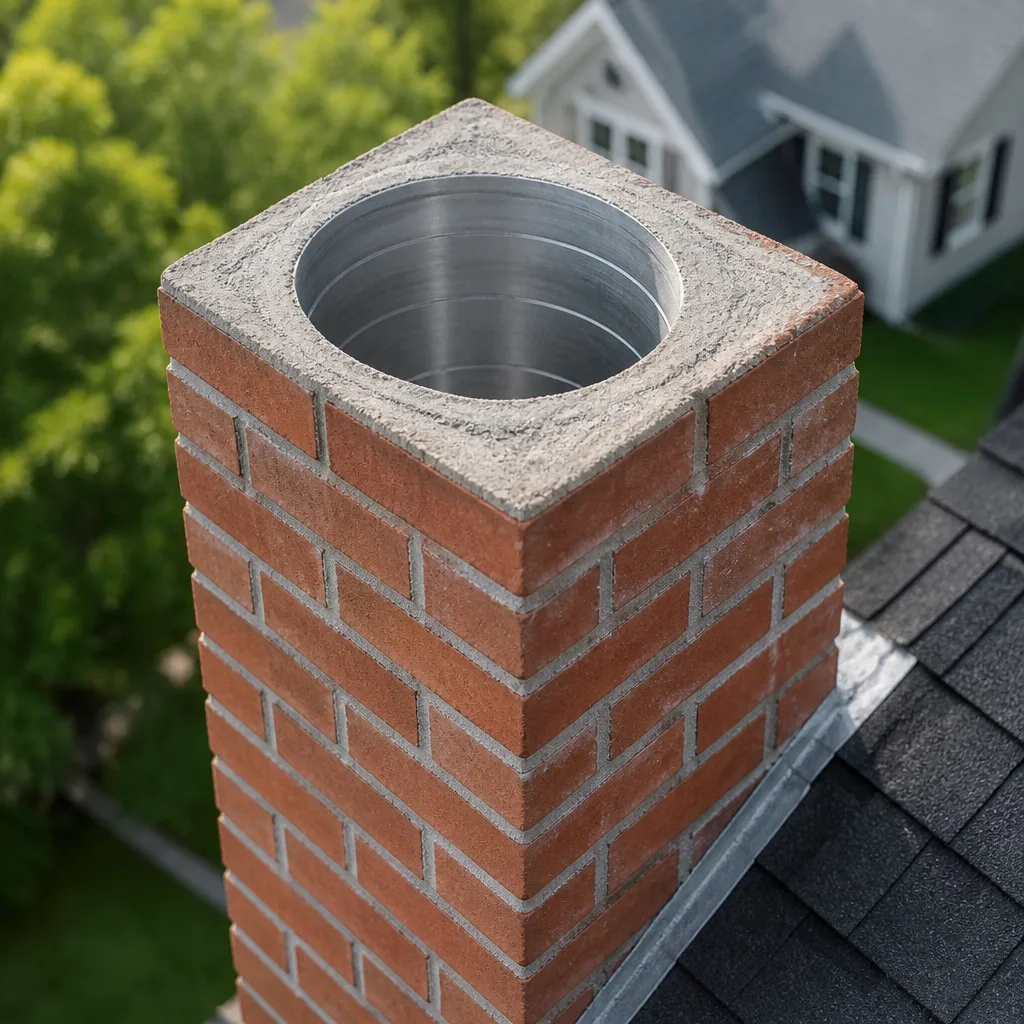
When a liner is compromised, repair options fall into a few categories. A full relining with a stainless system like DuraFlex restores the flue as a complete unit and is the cleanest fix for a badly damaged liner. HeatShield resurfacing can restore a deteriorated but still structurally sound flue by applying a ceramic-based coating that seals cracks and smooths the interior. The right call depends on the extent of the damage and the condition of the surrounding masonry.
This is also why we say a sweep without an inspection is just guesswork. A sweep clears the flue. An inspection finds the crack. If you haven’t had a Level 2 inspection, that’s the piece that’s missing. If you’re going ahead with a chimney repair, the inspection is the map that tells us what to fix.
What You Can Safely Monitor vs. What Needs a Level 2 Inspection
Some chimney symptoms are something you can watch over time. Others need a Level 2 inspection before the next fire is lit. Sorting between the two is the most useful troubleshooting skill a homeowner can develop.
Safe to monitor:
- Occasional light smoke spillage on startup that stops once the flue warms. Usually a cold-flue issue.
- Minor efflorescence that appears seasonally and doesn’t grow.
- A slight draft hesitation on windy days that clears when you close drapes or a nearby door.
- Stage-1 soot on the firebox walls you can brush off.
Needs a Level 2 inspection before next use:
- Any creosote smell in warm weather. That’s stage-2 or higher.
- Smoke rollout that doesn’t resolve with the window test.
- Visible rust on the firebox or damper, which means water is coming down.
- Any crack in the crown visible from the ground.
- A visible crack or dislodged tile in the flue, which usually means a camera inspection is needed.
- Chunk of masonry, soot, or debris falling into the firebox.
A Level 2 inspection uses a camera run down the flue to see its full interior and identify cracks, separations and buildup. Our inspections come with a camera photo report, so you see what we see. That matters when the recommendation is a repair. You shouldn’t have to take our word for a damaged liner; the photos show the problem and its location in plain terms.
As a general guide, most chimneys need sweeping once a year when used regularly, and an inspection at the same time. If you’ve moved into a home in Murray and don’t know the chimney’s history, book the inspection before anything else. If you’re working through maintenance, our chimney sweep service includes the check that goes with it.
Smoke Rollout and Backdraft: Working Through the Causes
Smoke rollout is the symptom homeowners notice first and understand last. When smoke comes into the room instead of going up the flue, the cause is one of a handful of things, and they have to be worked through in order. Here’s the sequence we follow.
- Test house pressure (window test). Crack a window near the fireplace and light a small fire. If smoke goes up cleanly, you have a pressure problem. See the pressure test section above.
- Check the flue for obstruction. A nest, a fallen tile, or a heavy stage-2 buildup can block draft. A camera inspection is the reliable way to rule this out.
- Look at the firebox geometry. A firebox that’s been modified, or a fire grate set too far back, can push smoke forward. A smoke shelf that’s been filled in or damaged won’t hold its draw.
- Assess the chimney height relative to the roof. A chimney that terminates below the roof’s pressure zone or near a tall adjacent structure will draft erratically. Rain caps and top-sealing dampers can help, but sometimes the solution is raising the flue termination.
- Check the top-sealing damper or throat damper. A damper that doesn’t fully open, or one that’s been replaced with the wrong size, will choke the flue and roll smoke forward.
Our technicians have up to 15 years of experience with this exact sequence, and the most common outcome is that the problem isn’t a dirty flue at all. It’s a pressure issue, a draft termination issue, or a damaged liner. Cleaning a chimney that’s already clean is a waste of your money and doesn’t solve the smoke. We’d rather show you what the camera sees and explain the fix before anyone starts working.
Common Mistakes to Avoid
- Assuming every smoking fireplace needs a sweep. Half the time the flue is clean and the problem is house pressure or a blocked cap. Run the window test first.
- Ignoring summer creosote smell. That’s a sign of stage-2 buildup, not just normal residue, and it needs a professional assessment, not another sweep. If it’s already burning hot in warm months, you’ve waited too long.
- Burning unseasoned wood to “save money.” Green wood produces more creosote per fire, and in Murray’s dry air the wood still takes a full season to dry properly. Split, stack, and cover it, then let it sit. Wet wood is the leading cause of stage-2 buildup.
- Skipping the annual inspection after a chimney fire. Even a small chimney fire can crack the liner without showing a symptom. A camera inspection is the only way to know the flue survived.
- Treating exterior staining as cosmetic. White efflorescence on the brick means moisture is actively moving through the masonry. Left alone, that leads to spalling and long-term deterioration.
- Covering a damaged crown with a cosmetic patch. A crown that’s cracked needs proper repair so water actually sheds. A surface patch just hides the leak.
- Venting a wood stove into a flue that wasn’t designed for it. Combustion appliance compatibility matters. If the flue isn’t sized and lined correctly for the insert or stove, draft suffers or the liner degrades.
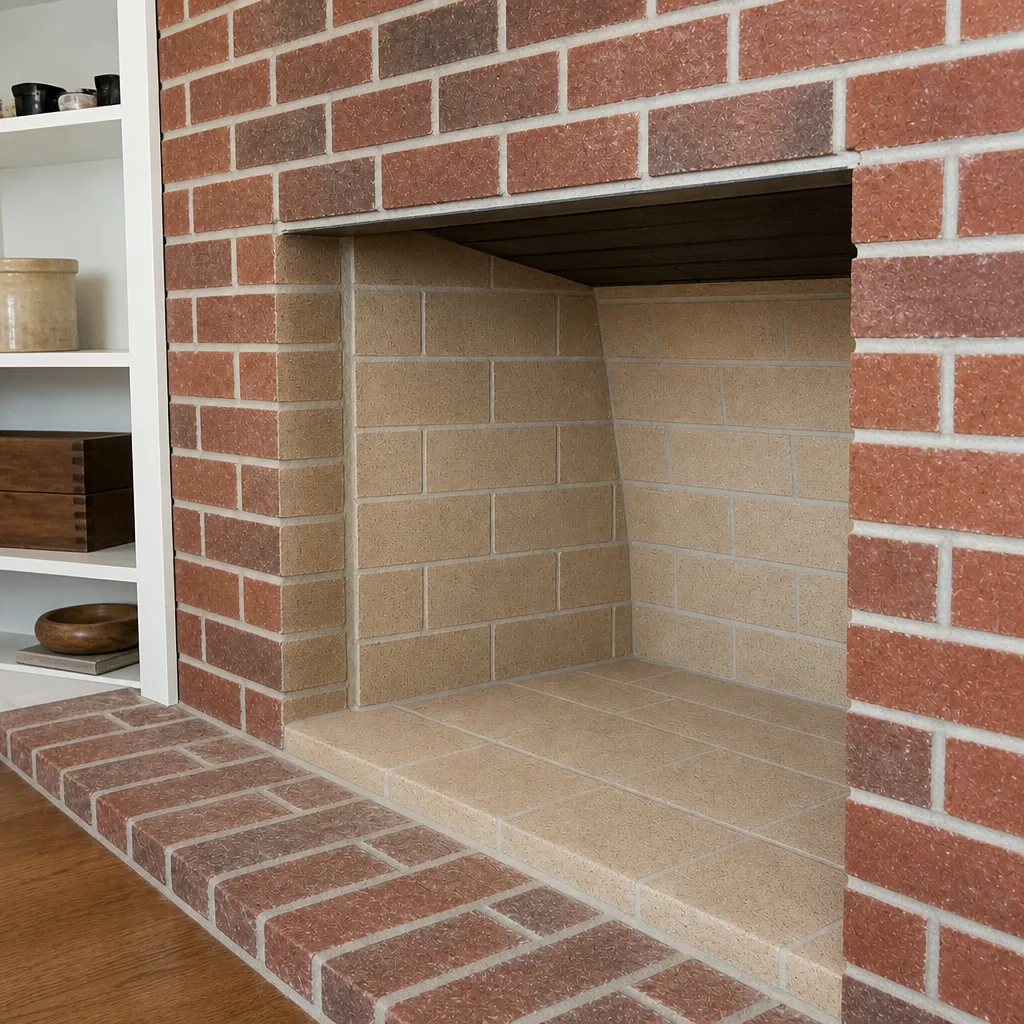
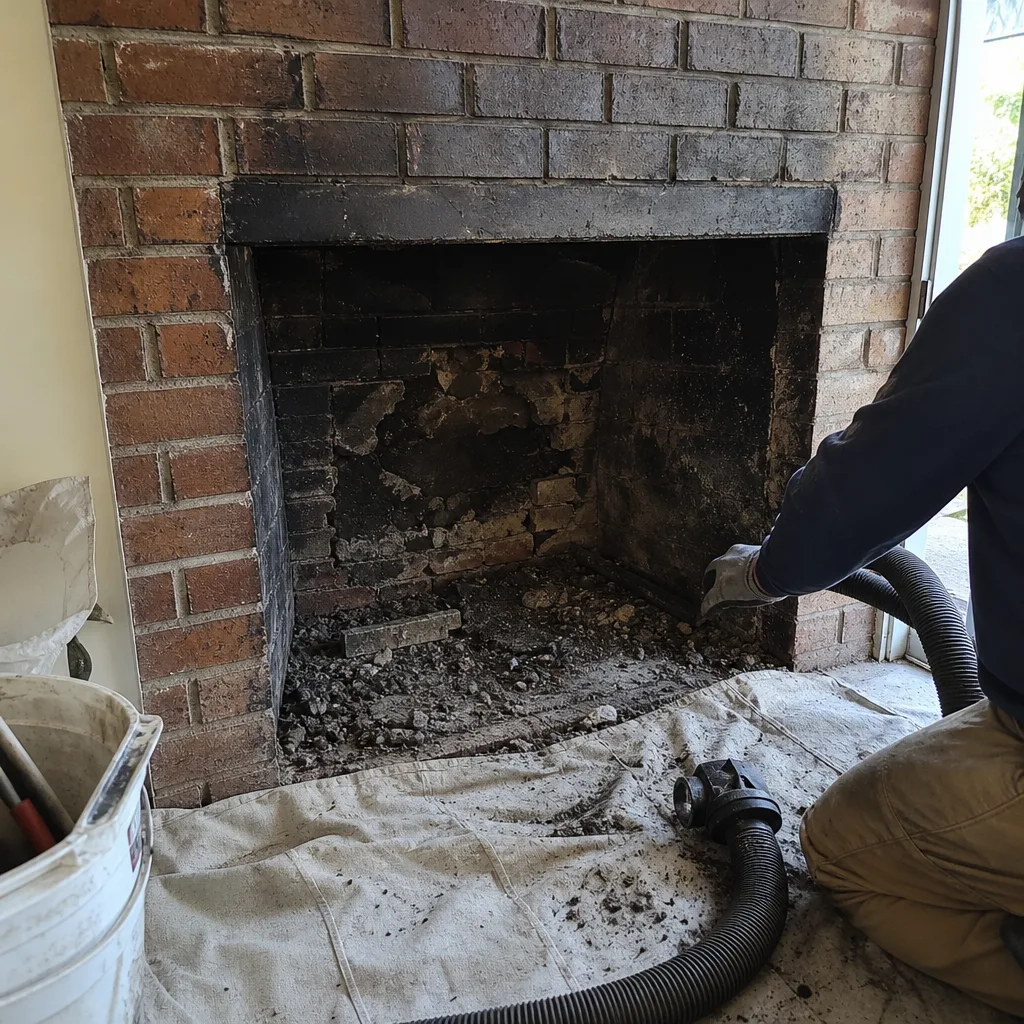
See the difference
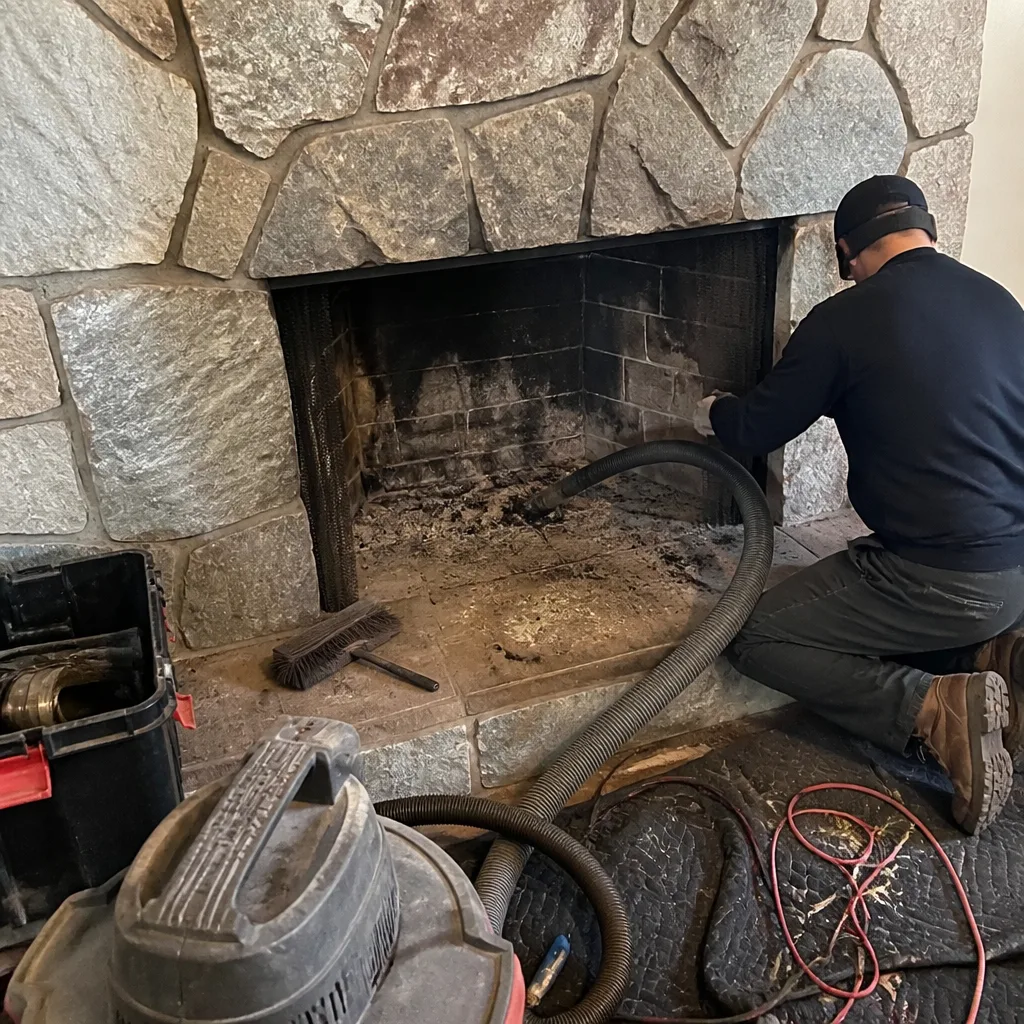 Before
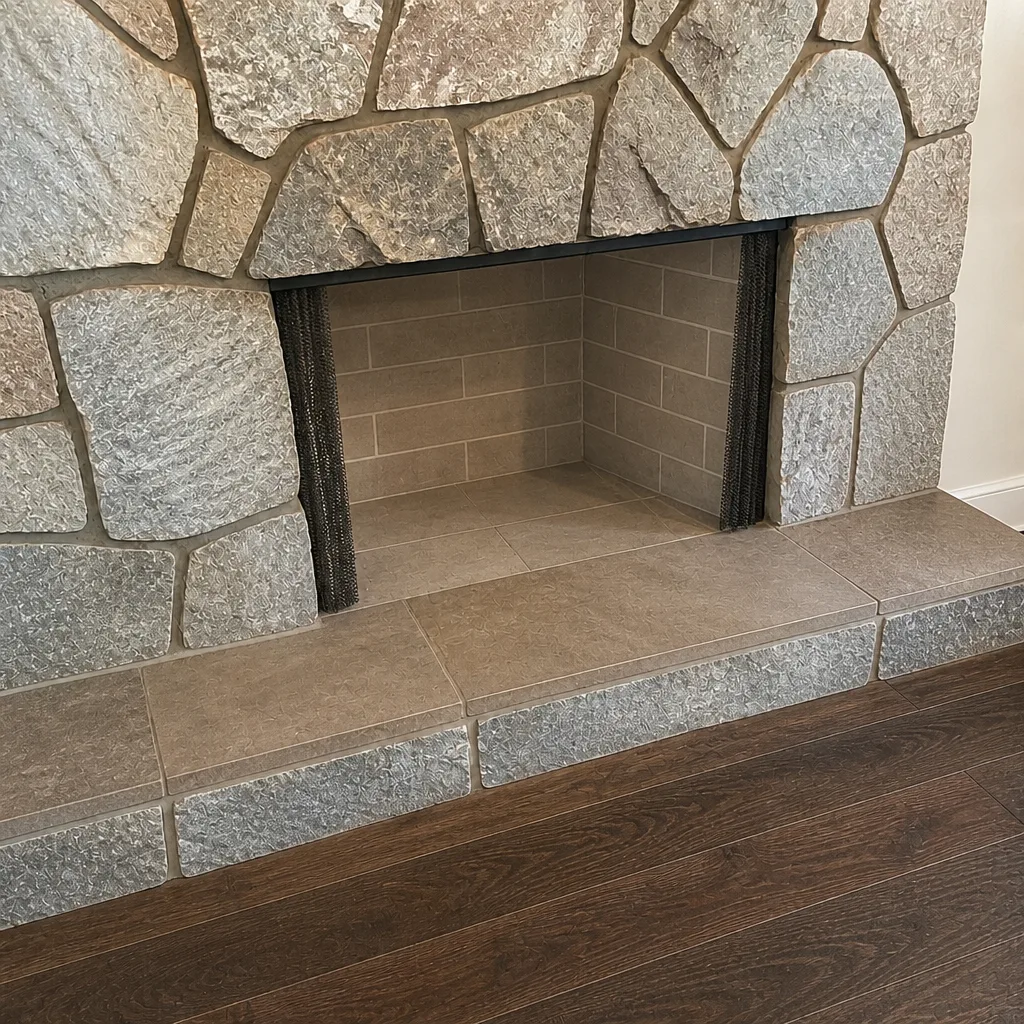 After
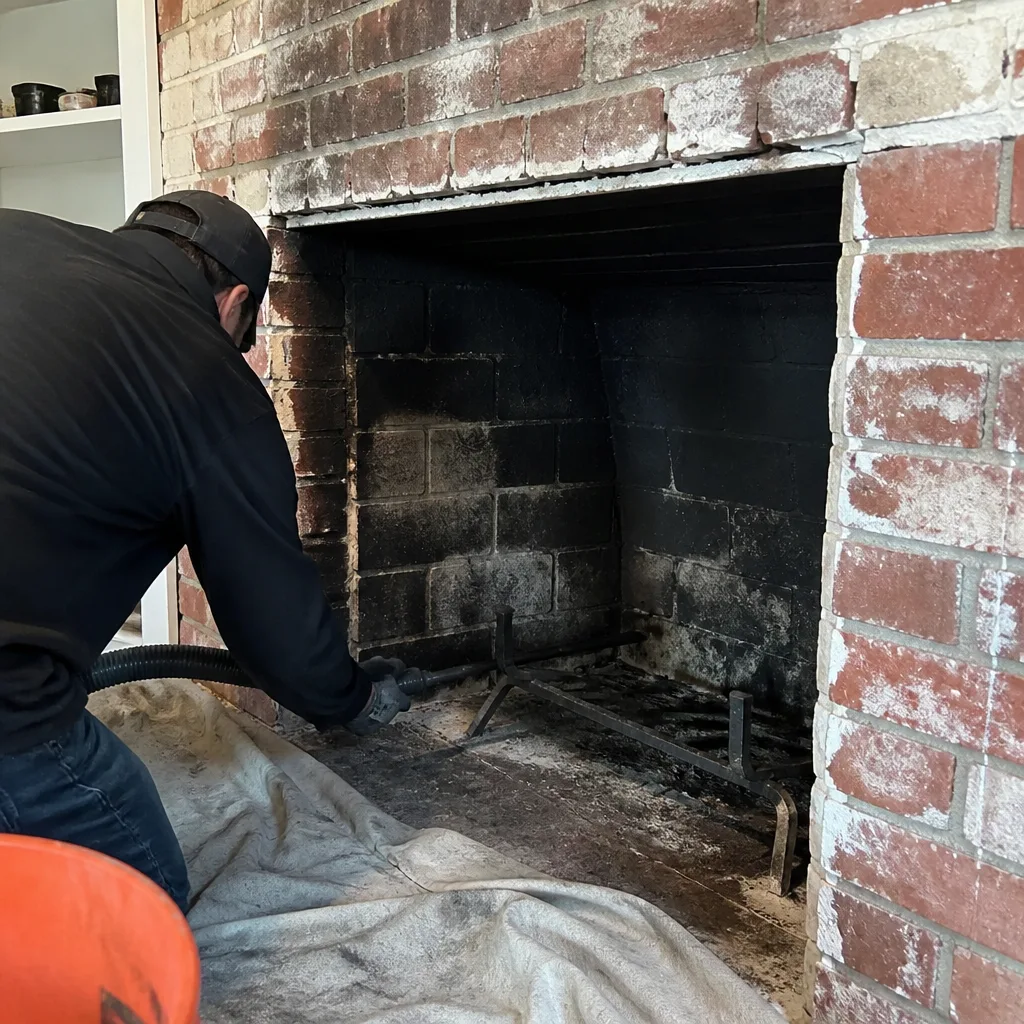 Before
 After
 Before
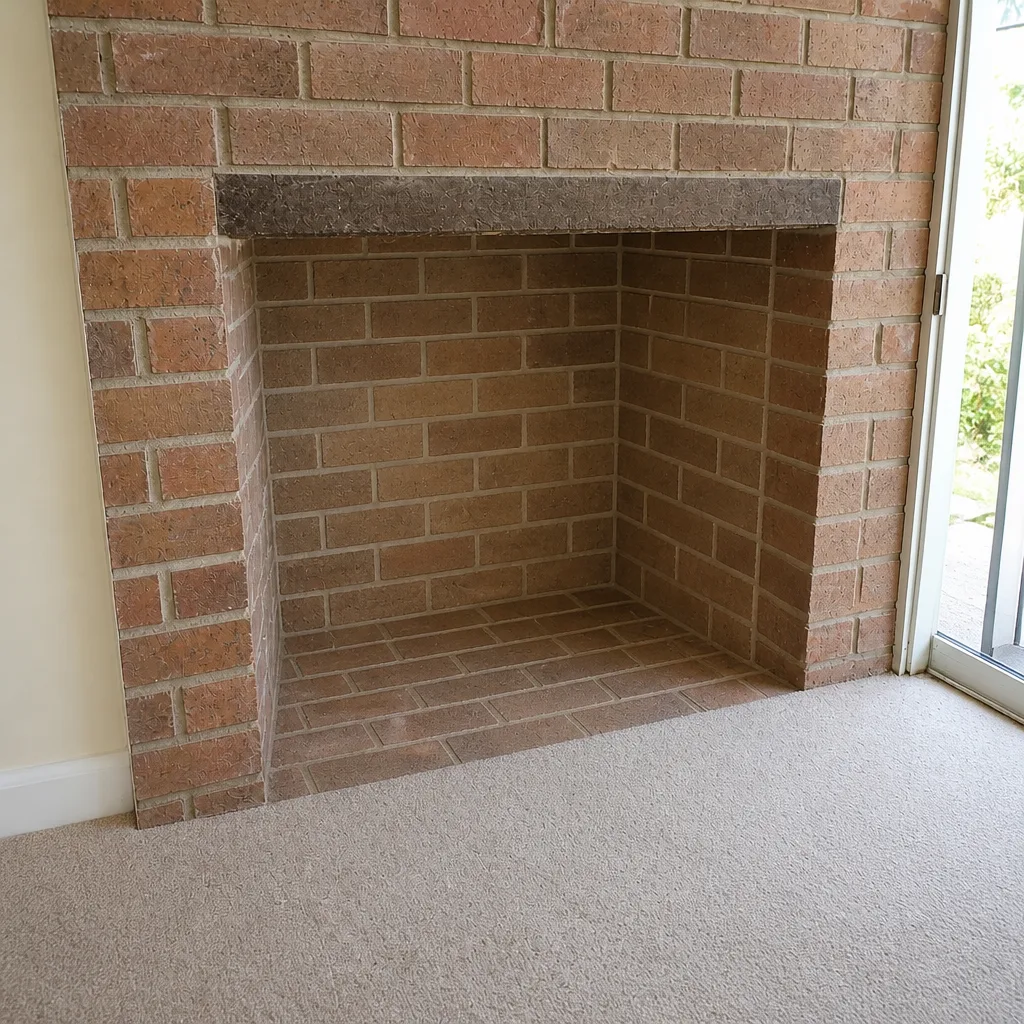 After
When to Call a Professional
Call a professional if you smell creosote in warm weather, if smoke rolls into the room even with the window cracked, if you see white staining on the brick, if you see rust on the firebox, if the crown is cracked from the ground, or if debris has fallen into the firebox. Any of these means a visual check isn’t enough and a camera inspection is warranted. Fire safety is the reason to act before the next burning season, not the fear of a repair bill; a routine sweep with a proper inspection is cheap compared to fixing a liner that cracked over the summer.
We handle the full chimney, from the firebox to the crown. Sweeping, inspection, fireplace repair, chimney repair, and cap and crown work all come from the same crew, so there’s nobody to hand you off to and no second opinion to sort through. Every sweep we do comes with a flat-price schedule agreed before we book, and every inspection includes the camera photos. The estimate is free and the price is set per job by the written estimate. Murray Chimney Sweep offers free estimates in Murray. Call (833) 468-3004.
We answer 24/7. Fast dispatch from 7am to 7pm, Sunday through Friday. We’re closed Saturday.
Frequently Asked Questions
A standard chimney sweep in Murray typically runs a few hundred dollars, and an inspection package usually adds to that figure, but the exact price depends on the flue type, access and condition. We agree the flat price with you before booking, so you know the number before we arrive. Call (833) 468-3004 for an exact quote; estimates are free.
Only if the camera inspection shows the liner is compromised: cracks, spalling, separations at the tile joints, or damage from a chimney fire. A HeatShield resurfacing can restore the flue without a full replacement in some cases, and a DuraFlex relining is the right choice when the liner is beyond resurfacing. You’ll see the photos of the damage before we recommend either. Nothing gets replaced on assumption.
Once a year during burning season for a regularly used fireplace, and more often if you burn a lot of wood or notice buildup. An annual sweep paired with an inspection is the baseline that keeps the flue safe. Schedule it before the burning season starts, so a surprise doesn’t leave you without a fireplace on the first cold night.
Creosote accumulates, and stage-2 deposits ignite more easily than most homeowners realize. A chimney fire can crack the liner, which then becomes a fire and carbon monoxide pathway into the house. Skipping a sweep doesn’t usually cause a problem on the day you skip it. It stacks the risk across years, then shows up in an inspection as a repair you could have prevented.
Most often it’s house pressure, not a dirty flue. Weather sealing, kitchen exhaust fans, and modern construction can pull smoke back down a flue that’s otherwise clean. Run the window test first. If cracking a window near the fireplace fixes it, you have a pressure problem and a draft solution is the right answer.
Yes, for the safe parts. You can run the window pressure test, look for visible cap and crown damage from the ground with binoculars, and monitor for creosote smell. What you can’t do yourself is inspect the flue interior or assess liner damage. Anything involving the flue, liner, or firebox interior goes to a professional because the risk of a hidden crack is real.
The Bottom Line
Troubleshooting a chimney means working through symptoms in order: pressure, obstruction, water, liner condition. The pressure test is the step most homeowners skip and the one that saves the most money. Creosote smell in summer means stage-2 buildup, not residue, and it changes the fix. Cap and crown failures masquerade as draft problems, so check the top of the chimney before you blame the bottom. And the one symptom a homeowner can’t diagnose alone is liner damage. That needs a camera inspection and a professional read of what it finds. When the diagnosis points to repair, the same crew that inspected the chimney fixes it. Murray Chimney Sweep handles chimney sweep work alongside chimney repair and cap and crown installation, and we use professional-grade materials from DuraFlex, HeatShield, Olympia Chimney, Famco, Gelco, and Copperfield.
Call (833) 468-3004 to schedule a sweep or a camera inspection. We answer 24/7. Fast dispatch from 7am to 7pm, Sunday through Friday. Estimates are free.
Written by the team at Murray Chimney Sweep.